
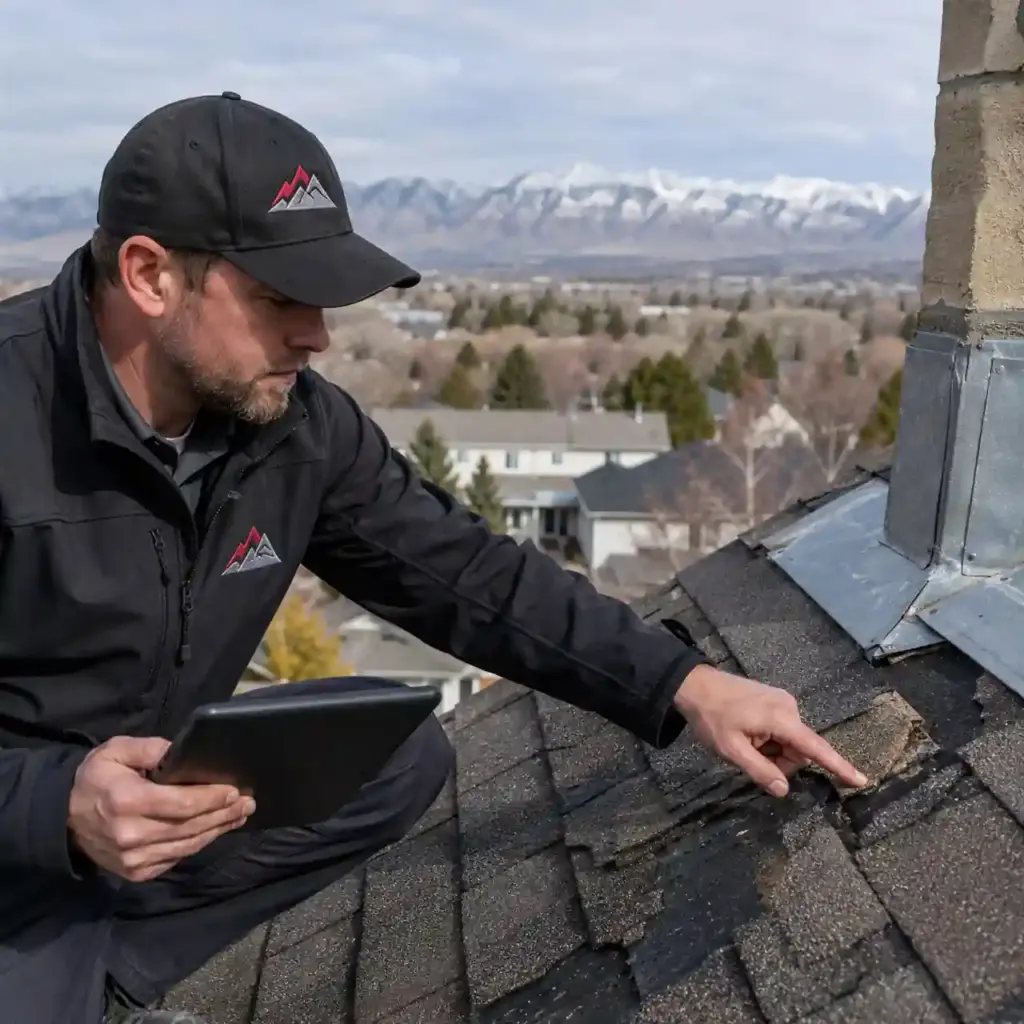
Eastern Idaho’s weather swings between intense summer thunderstorms, hail, and heavy straight-line wind off the open plain. A damaged roof left unaddressed turns a repair job into a much bigger bill fast.
Here’s exactly what to do in the hours and days after a storm hits your roof.
Stay off the roof, document visible damage from the ground, tarp any active leak, and book a professional inspection within a few days so the damage is documented before you file an insurance claim.
Right After the Storm
- Stay off the roof. Wet, damaged shingles and unstable decking are a real fall risk. Leave the climbing to a professional.
- Check for interior signs first. Water stains on ceilings, a musty smell in the attic, or drips are the clearest sign of an active leak that needs attention now, not later.
- Photograph what you can see safely from the ground. Missing shingles, dented gutters, or debris in the yard all help document the damage for your insurance claim.
- Tarp anything actively leaking. A temporary tarp over an active leak prevents interior damage from getting worse while you wait for an inspection. Most roofers can do this same-day.
What Storm Damage Actually Looks Like
Hail damage on asphalt shingles often shows up as small, dark, soft spots or bruises where granules have been knocked loose. Not always as an obvious hole.
Wind damage tends to show up as lifted, cracked, or missing shingles, usually starting at roof edges and ridges. Both types of damage can be hard to see from the ground, which is exactly why a professional inspection matters even if the roof looks fine from your driveway.
Get a Documented Inspection Within a Few Days
Book an inspection as soon as reasonably possible after the storm. A roofer will document the damage with photos and a written report, which becomes the backbone of your insurance claim.
Waiting too long can make it harder to prove the damage was storm-related rather than pre-existing wear.
Filing the Insurance Claim
Most homeowner’s insurance policies cover storm and hail damage to the roof, minus your deductible. A roofer who regularly works with insurance claims can walk your adjuster through the documented damage, which often results in a fairer settlement than going it alone.
Ask directly whether the company you’re calling handles claim documentation and adjuster walkthroughs as part of the inspection.
Watch Out For Storm Chasers
After any major storm, out-of-state contractors sometimes show up door-to-door offering fast, cheap repairs. Verify any contractor is actually licensed to work in Idaho, get a written estimate, and be cautious of anyone pressuring you to sign a contract on the spot before an insurance adjuster has even seen the damage.
Eastern Idaho’s Storm Season Isn’t Just a Summer Thing
A lot of homeowners think of storm damage as a single dramatic event. Around Idaho Falls it tends to show up in a few different forms across the year.
Late spring and early summer, roughly May through July, bring the thunderstorm and hail activity that does the most direct damage to shingles. But the same open Snake River Plain that gives this area its big sky also gives wind nothing to slow it down before it reaches neighborhoods on the edge of town, in places like Ammon and out toward Rigby. Those straight-line wind events can lift or crack shingles even without a drop of hail.
Then there is wildfire season in late summer, when smoke and ash from regional fires settle over eastern Idaho for days at a time. Ash alone will not damage a roof, but it can trap moisture against shingles and make it harder to spot a leak developing underneath a layer of soot until it has already caused some damage.
Why Idaho Insurance Claims Move a Little Differently Here
Idaho does not have the same hurricane or wildfire-driven insurance market pressure you would see in some other states, which is generally good news. Adjusters here are used to handling straightforward wind and hail claims, and most insurers process them without excessive delay.
That said, because a lot of eastern Idaho neighborhoods, particularly newer ones in Ammon, Rigby, and Iona, were built around the same time, a single hailstorm can generate a wave of claims across a whole subdivision at once. That is exactly the situation storm-chasing contractors look for. If unfamiliar trucks start going door to door in your neighborhood right after a storm, it is worth being extra careful about who you hire, even if the pitch sounds urgent.
What Roof Age Has to Do With Storm Damage
A newer roof with plenty of granule coverage can often take a moderate hail event with only cosmetic bruising, the kind that shows up on an inspection but would not necessarily need a full claim. An older roof that was already thinning before the storm hit is a different story.
The same hail event that leaves a five-year-old roof with a few soft spots can push a twenty-year-old roof straight into leak territory. This is one more reason a professional inspection after any real storm matters, even when you are not sure the damage is bad enough to bother with, since what looks minor from the ground can mean something very different depending on how much life was already left in the shingles.
Documenting Damage the Way Idaho Adjusters Expect
Because hail size and wind speed vary so much even within a single eastern Idaho storm, an adjuster is going to want more than “it hailed pretty hard.” Note roughly when the storm hit and how long it lasted. If you have a doorbell camera or a neighbor’s, that footage can be surprisingly useful for confirming hail size and duration later.
Photograph any dented gutters, damaged window screens, or dinged patio furniture too, since that kind of collateral damage often supports a roof claim even when the shingle damage itself is hard to see clearly from ground level. The more specific and dated your documentation is, the fewer questions an adjuster will have when it is time to approve the scope of work.
Don’t Wait on a Suspected Leak
A small leak after a storm rarely stays small. Trapped moisture leads to rot, mold, and insulation damage that costs far more to fix than the original roof repair would have. If you suspect any storm damage, a free inspection is the fastest way to find out what you’re actually dealing with.
Quick Answers
How do I know if my roof has hail damage?
Hail damage often shows up as small, dark, soft spots or bruises where granules have been knocked loose, which can be hard to see from the ground. A professional inspection is the reliable way to confirm it.
How long do I have to file a storm damage claim in Idaho?
Timelines vary by policy, but it’s best to document damage and file within a few weeks of the storm. Check your specific policy for its exact deadline.
Will my insurance rates go up after a claim?
A single weather-related claim (like storm or hail) is typically treated differently than an at-fault claim, but ask your insurance agent about your specific policy’s rules.
Should I get multiple repair estimates before filing a claim?
A documented inspection from one qualified roofer is usually enough to start a claim. You can always get a second opinion if you want to compare scope or pricing.